Choose Your Country

Creating a beautiful and thriving garden that looks professionally designed requires thoughtful planning and understanding fundamental design principles—and then the best part, selecting your favorite plants. A well-designed garden enhances your outdoor space by incorporating key elements such as balance, unity, harmony, and repetition. These principles apply whether you are working with roses, perennials, or a mix of both. By understanding these design elements, you can achieve a garden that looks professionally curated while offering year-round interest.
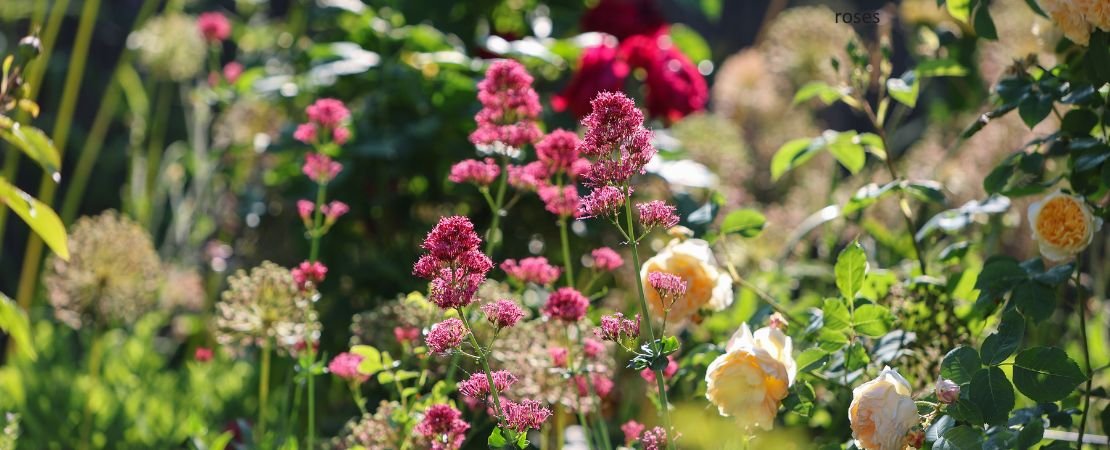
Balance in garden design refers to creating visual stability and harmony by distributing plants, structures, and colors evenly throughout the space. There are two types of balance to consider:
Tip: Consider pairing structured roses with soft, billowing perennials like lavender or nepeta to achieve a natural yet balanced look.
Unity brings cohesion to a garden by using repeated elements such as color schemes, textures, and plant types throughout the space. By repeating key design components, your garden will feel connected rather than chaotic.
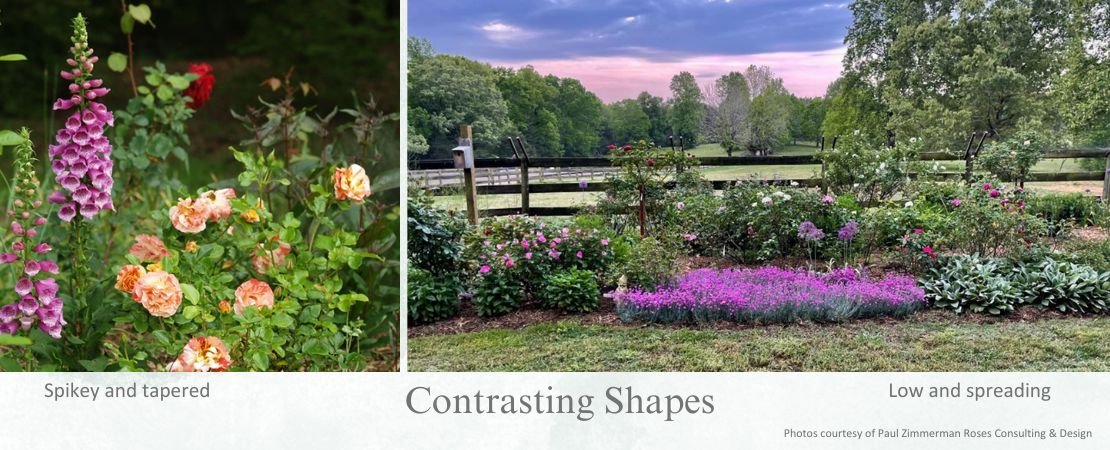
A garden should feel harmonious, where all elements work together seamlessly. Contrast, on the other hand, creates visual excitement by combining different shapes, textures, and colors.
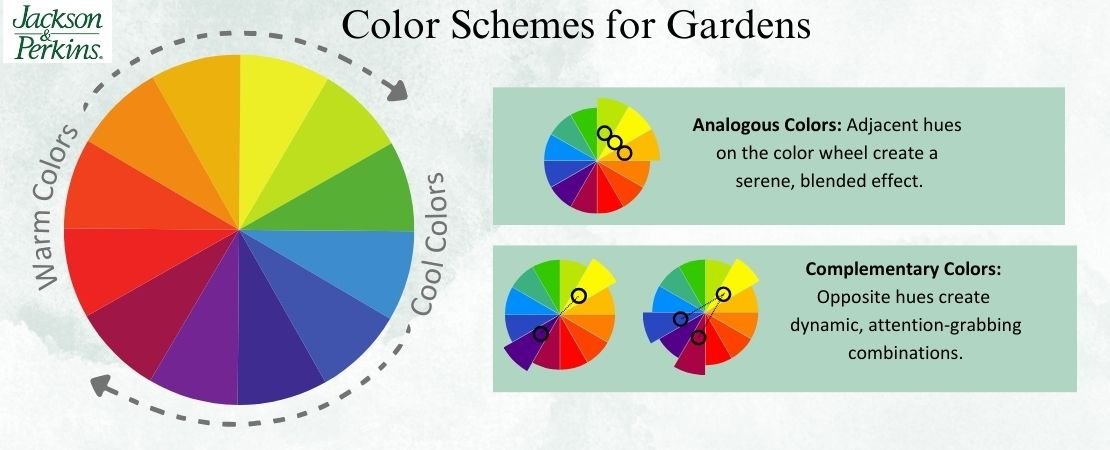
Color plays a significant role in creating mood and style within a garden. Using the color wheel as a guide can help you achieve either a calming, harmonious look or a bold, eye-catching display.
Tip: Roses in pastel hues pair beautifully with silver-foliaged plants like certain sedum to create a soft, romantic atmosphere.
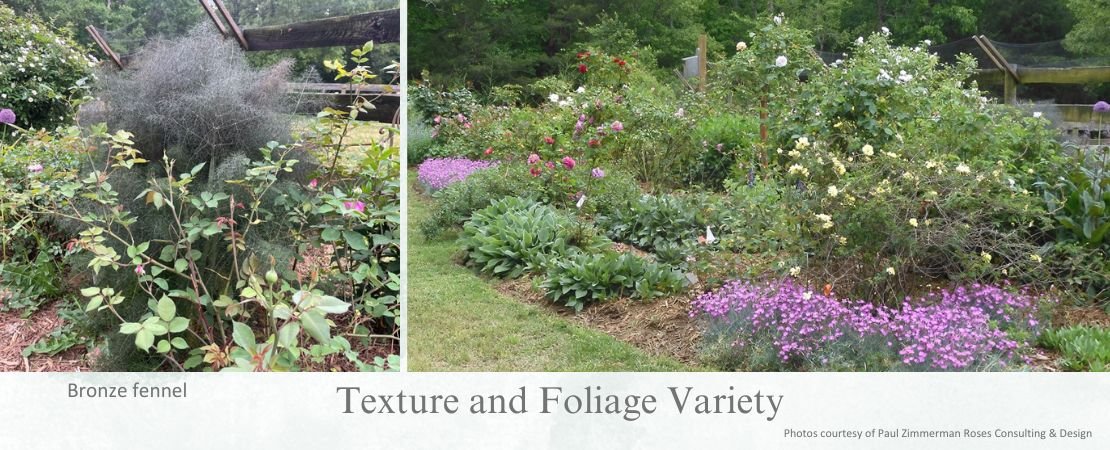
Texture is just as important as color when it comes to designing a visually appealing garden. Combining fine-textured plants with bold, coarse foliage creates depth and dimension.
To maintain a vibrant garden throughout the year, it's important to choose plants with staggered bloom times.
Tip: Create a planting calendar to ensure your garden has continuous blooms and visual interest across all seasons. Use the filters on our website to create your custom list and shop by season
A thoughtful garden layout ensures each plant has the space it needs to thrive while maintaining a balanced look. Using graph paper or garden design software, plan out plant placement based on their mature size and growth habits.
When selecting plants for your garden, consider factors such as sun exposure, soil type, and climate zone. Grouping plants with similar care requirements helps ensure long-term success.
By combining these essential elements—balance, unity, contrast, color, texture, seasonal interest, and proper planning—you can create a garden that feels professionally designed yet uniquely yours, because you did it yourself! Whether you're working with an existing space or starting from scratch, these principles will help guide you in making well-considered choices.
And remember, you can always dig up a perennial and move it or try something new.
For expert advice, high-quality roses, and companion plants, shop Jackson & Perkins.
Get more details for planning your garden with our garden design guides.

