Choose Your Country

There is a garden for everyone, a place to pick and eat our homegrown fruits, where the flowers we love bloom, or where we relax amid the leaves. But too often we find ourselves harassed by garden chores, or growing plants for which we have no affinity, or stressed by plants that are not growing well. Then the yard or garden or balcony is not a place of joy.
How do we break out of that? By taking control and shaping it to suit our particular lifestyle. Here are some suggestions for transforming the yard, garden or balcony into a wonderful place, one that fits your space and meets your expectations.
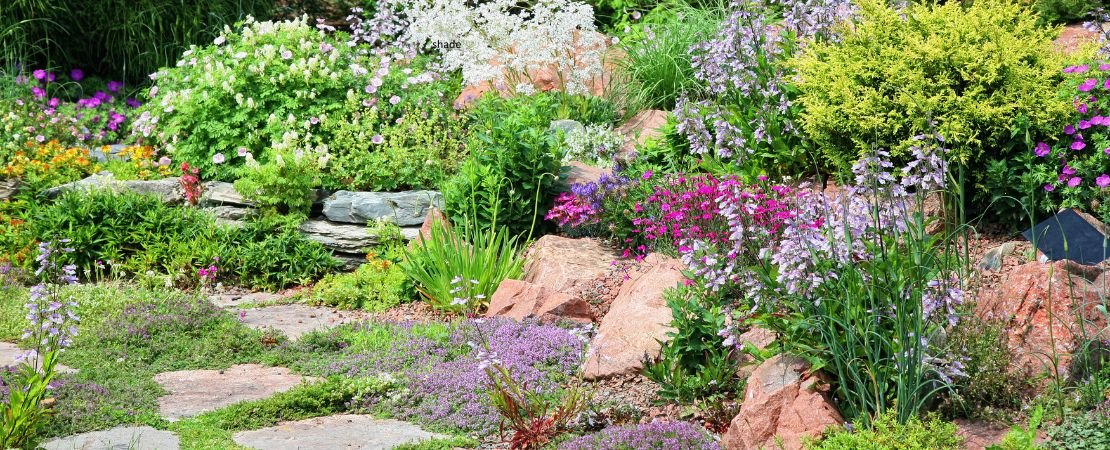
First, of course, you need to know what you want. Perhaps, visualize the space that you would really like to have and then work toward having that.
Gardens around the world are very diverse. It is worthwhile to think about what you like, not simply imitate your parents. Yards, gardens, and balconies can produce lots of delicious fruits and vegetables. Or armloads of gorgeous flowers. Or grow as a green space that requires minimal maintenance, one that is enjoyed more often than worked on.
Within all these types, the yard, garden, or balcony can be formal, with matching plants in neat rows, through all the stages of less formal to "cottage garden" style, where the flowers grow in happy profusion, as if they were wild.
Today, although a garden can be made by digging up the soil and planting seeds, as our grandparents did, we have much greater flexibility. For example, plant a prepared group of plants, as in a "Blooming Block", so you just place the plants onto the soil or potting soil surface, add water, and watch the plants mature. Or, fill your space with potted plants. Plants sold in pots are past the seedling stage, so are much more likely to survive. Of course you can put them in the ground but you can also simply grow them in their pots. Most will flower and fruit in the same season. A couple of pots of flowering roses or geraniums will transform the walk or the balcony.
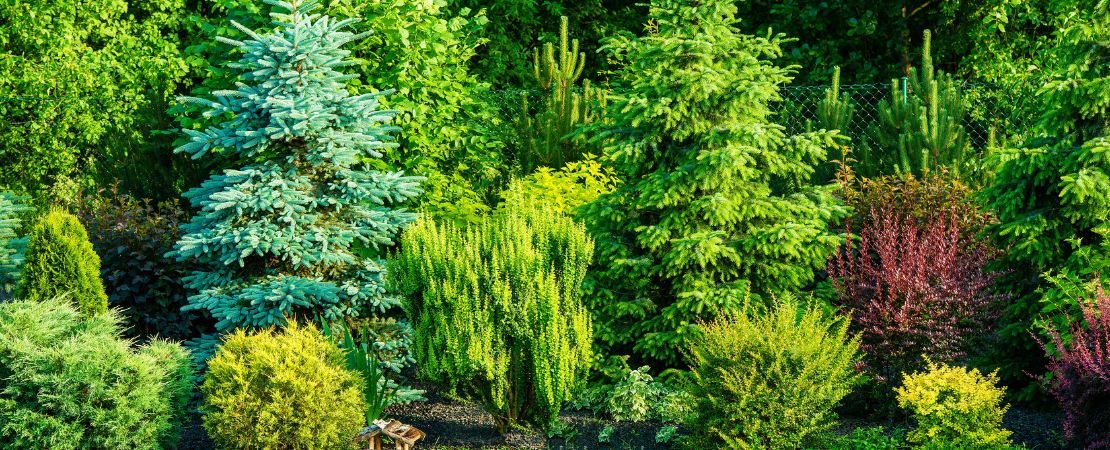
Design a garden that suits you. Plant evergreens like Thuja (arborvitae), Azelea (azeleas and rhododendrons), and Daphne for an easy all-year look. Add Cercis (redbud), Cornus (dogwood), and Acer (maple) for dramatic leaf color changes. Make a Magnolia, a Forsythia, or a Viburnum (snowball bush) a focal point to showcase its spectacular flowers. If you particularly like a plant, plant several. I have many irises and peonies; too many for some people but I love them and they grow well for me, so it is nowhere near too many for me. If you do not like a plant, for whatever reason, it should not be in your yard.
For a yard of plants that grow well without much work, spend a minute reading about the plants before choosing. Natives to your region will grow well for you; it is what they have always done. Check frost and heat hardiness and drought-tolerance of non-native plants and plant ones recommended for your climate. Unless, of course, you love planting out sensitive bulbs every spring and digging them up to store indoors over the winter. In that case, prepare beds to hold plants from tropical and subtropical zones, get started growing them, and be the wonder of your neighborhood.
Don't be afraid to find ways to mitigate parts of yard maintenance you don't like. If bending is hard, fill raised beds to get the plants up to a comfortable height. You don’t have to build a raised bed to have plants at a more comfortable height: put pots on steps or walls or benches. When you absolutely must get down to the ground, have a kneeling mat to protect your knees. Try a small stool in the garden; getting up from even 6” off the ground is ever so much easier than getting up off the ground itself.
Weeds do not have to be an ongoing torment. Plant ground covers to choke them out. There are many beautiful ones, such as Thymus (creeping thyme), Veronica (speedwell), Delosperma (hardy iceplant). My Thymus lawn is so dense that very few weeds survive. It grew dense on its own but you can speed the process by planting more closely than is usually advised, because the usual spacing is aimed at having big plants, not crowding out weeds. Pretty much any plant you like, from Tagetes (marigold) to Daphne, can be planted densely to inhibit weeds. Another weed control method is to add deep mulch—clippings or wood chips or gravel, depending on where you live—burying existing weeds and making a loose surface from which weeds are easily yanked. Or, ask why each of the plants you have been killing is a weed. Maybe it is just a little wild plant enjoying a corner of your space, more a wildflower than a pest. In that case, you can enjoy it, you do not have to dig it out.
Timing. Notice whether your love of the garden takes a dip in the same month every year. Why is that? You get too busy to garden? It is too hot or too rainy or too windy to enjoy being out there? Adapt your garden to that. If spring planting season is always a crazy rush you don’t enjoy, give up on spring plantings. Plant perennials like Tulipa (tulip) and Narcissus (daffodil), early Rosa (rose) and Paeonia (peony), and enjoy them bursting into flower every spring without effort from you (spring blooming bulbs are ready to reserve over summer for shipping in fall, since fall is the best time to plant them.). Alternately, if you don’t like being outdoors when it is hot in August, admit that and plant flowers that will carry on during the heat, Asclepias (milkweed), Echinacea (coneflower), Lavendula (lavender), for example, so that you don't need to be out there until it starts to cool. Don't underrate the value of instant flowers produced by buying Blooming Blocks or potted perennial flowers. So easy and so satisfying. Just be sure to keep them moist.
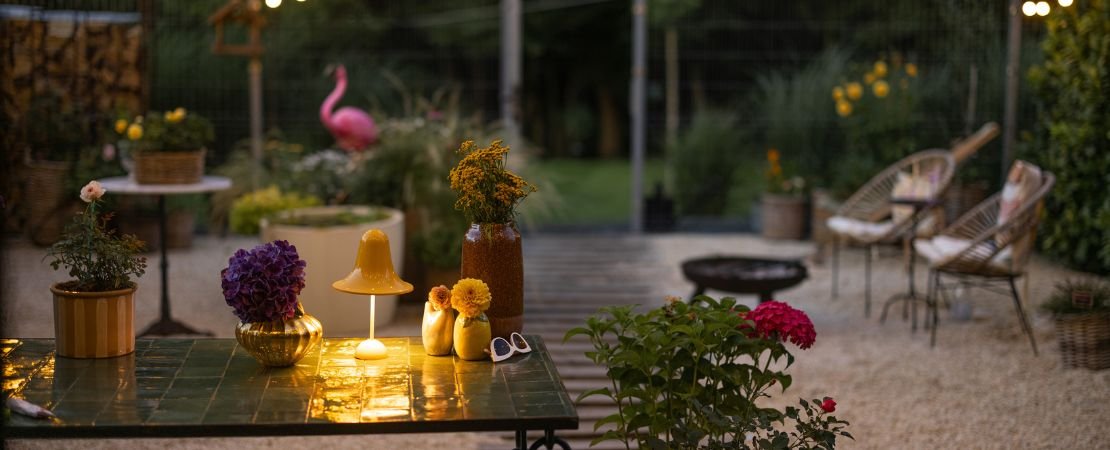
Cater to your busy lifestyle. If you do not get home before dusk, grow night-blooming plants. These have pale or white flowers that open at twilight, often releasing a lovely scent. Night blooming flowers include Philadelphus (mock orange), Gardenia, and Lonicera (honeysuckle). Check the variety because not all the plants in these large groups open at night.
Watch for plants that multitask. Fruit trees not only produce fruit but are attractive; Malus (apple) and Prunus (cherries) have gorgeous flowers. Vitus (grape) and Actinidia (kiwi) will climb a trellis, creating shade and privacy, as well as providing fruit. Fragaria (strawberry) and Thymus are both marvelous ground covers.
A yard, garden, or balcony with a rhythm that matches yours and plants you love is your own bit of paradise.
All these ideas apply whether you have a large space, a tiny urban yard, or just a balcony. Experiment and find your favorites.
Written by Kathy Keeler, A Wandering Botanist, for Jackson & Perkins

