Choose Your Country

Few garden styles are as instantly welcoming as a cottage garden. Full of color, texture, and life, it's a space that feels abundant and personal. The English cottage garden has deep roots in tradition but fits easily into modern landscapes. It might frame your front steps with flowers, soften the edges of a patio, or fill a backyard with layers of color and scent.
This guide will help you get started with cottage garden plans, planting ideas, and our favorite flowers to bring your space to life.
A cottage garden is an informal garden style that originated in England centuries ago. Traditionally planted close to the home, these gardens were once utilitarian, filled with herbs, vegetables, and a few flowers. Over time, their purpose evolved, becoming more ornamental while retaining a casual, overflowing feel.
Today, a classic cottage garden includes:
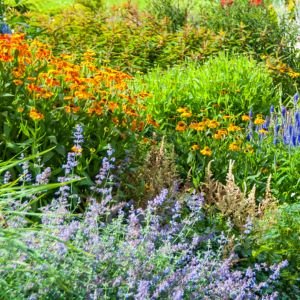
Cottage gardens aren't about perfection. They're about abundance, personality, and plants that play well together.
Start with structure, then relax the rules. Cottage gardens look freeform, but smart planning is what makes it all work. You don't need a rigid blueprint, just a few guidelines to help you build a garden that grows beautifully over time.
Most cottage garden plants bloom best in full sun, so aim for a spot that gets at least six hours of direct sunlight. If your space has partial shade, don't worry, plenty of classic plants like foxglove, columbine, and bleeding heart are shade-tolerant.
Establishing clear, natural boundaries helps frame the space and contain the garden's exuberance. This could be:
These elements give your garden definition while still keeping the look soft and informal.
No rulers needed, just sketch a plan that allows for flow and variety. Visualize your garden as a canvas, incorporating elements that encourage discovery and delight. Keep these ideas in mind:
Tip: Dense planting is your friend, helping you achieve the characteristic fullness of a cottage garden while suppressing weeds, keeping soil moist, and reducing maintenance.
Great cottage gardens feature a diverse selection of plants. They're often a mix of perennials, annuals, self-sowing flowers, herbs, and even edibles. The secret is blending textures, shapes, and bloom times so there's always something catching the eye.
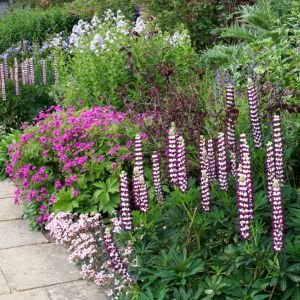
Some annuals will self-sow with no help from you:
These add naturalization and a bit of unpredictability, in the best way.
Blend beauty with function and fragrance:
Nestle a weathered bench or a small bistro table in the blooms. It's a simple way to enjoy the garden from within, not just admire it from afar.
Use pea gravel, flagstone, or even bricks to form a curving path that guides you through the garden. It helps organize the chaos and adds a sense of exploration.
Train climbing roses, clematis, or honeysuckle to scramble up a trellis, arch, or old fence. Vertical elements break up the view, add privacy, and draw the eye upward.
Tuck in a bee house, bird feeder, birdbath, or small fountain to bring movement and life. Cottage gardens aren't only for people, they're for pollinators too.
Old watering cans, terra cotta pots, barrels, and even repurposed crates can hold annuals or trailing vines in cottage gardens. Group them for impact, or scatter a few as accents.
There's no single formula for a cottage garden. All you need is a love of flowers, a dash of creativity, and a willingness to let nature lead. That's what makes a cottage garden such a joy. You can start small, with just a few plants and a path, and grow it over time. Add what you love, edit what doesn't work, and enjoy the process.
Create a space that feels alive, personal, and a little bit magical. Choose the style that feels like you, from a formal, traditional English cottage garden to a relaxed, wild look.

