Choose Your Country

Long before today's modern roses came into fruition at the skilled hands of rose breeders, Old Garden Roses enchanted gardeners for hundreds of years. Add the elegance of history to your garden with Old Garden Roses. Revered for their strong attar or delicate fragrance and vintage appeal, these roses have been cherished by gardeners for centuries. Sometimes called Antique Roses, they embody a rich history and are deeply rooted in the past—so much so that the Empress Josephine Bonaparte cultivated one of the largest collections in her gardens at Malmaison beginning in 1799. Artists like Joseph Redouté beautifully captured their elegance, making them a treasured addition to any rose lover's garden.
A new and exciting Collection in the Jackson & Perkins Library of Roses that will expand each season. Grow these historic and often rare selections and browse the Library to find Exclusive Introduction, Vault, and Around the World roses for a garden that blooms with unique character.
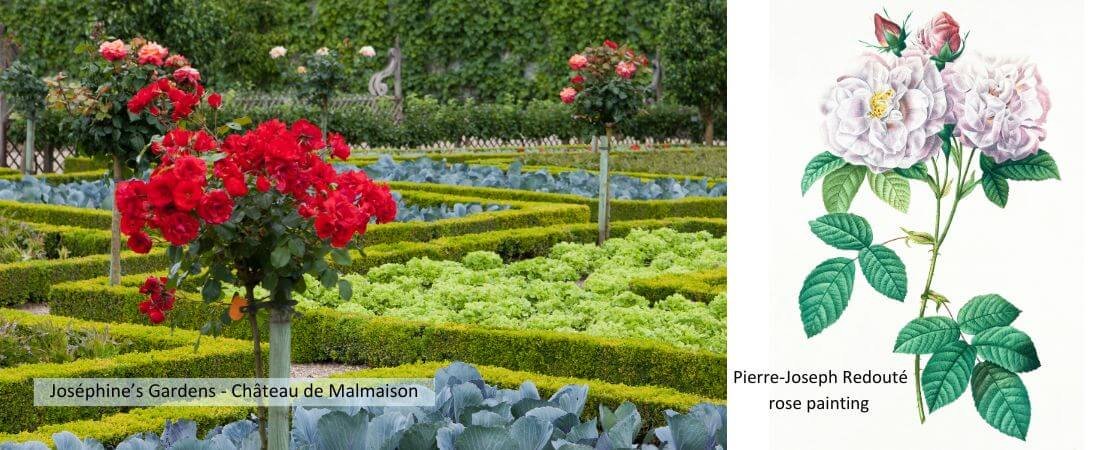
Roses are categorized into classes, Modern Roses and Old Garden Roses. Examples in the Modern Rose class are Hybrid Tea, Floribunda, and English Roses. The Old Garden Rose class stands out due to its historical legacy and the rose's endurance. In 1867, the debut of the 'La France' rose by Jean Guillot marked the start of the modern rose era. Distinguished by its high-centered bloom, it became the standard for today's Hybrid Tea Roses. Any rose class predating 1867 is considered an Old Garden Rose, while those developed later belong to the Modern Rose group.
There are groups of roses outside of Old Garden and Modern Roses such as Species Roses. These are the original wild roses that all our roses came from. Most Species Roses are single petalled meaning a single row of petals. Many are fragrant and among them some of the most interesting rose hips are to be found. Rose hips are the orange and red 'berries' you see on roses in the fall. They are actually not berries, but are seed pods containing rose seeds. But only the wild roses will grow true (which means growing to be the same plant) from seed. Old Garden and Modern Roses are hybrids which are roses crossed with other roses. Because of their varied background they will not grow true from seed. They can only be propagated from cuttings or by budding or grafting.
Old Garden Roses can generally be placed into two groups: Post China Influenced Roses and Old European roses. Old European Roses are generally heavily petalled roses, with flatter flowers and bearing strong fragrance. They bloom once during the growing season (although there are reblooming varieties) with that bloom cycle often lasting 4-5 weeks or more. Because of their shorter bloom cycle, they will cover themselves in hundreds of blooms displaying a spring show few modern roses can rival. Here's a closer look at some beloved types within the Old European Rose group:

Photo courtesy of Paul Zimmerman Roses Consulting & Design
Also known as French Roses, Gallica Roses are among the oldest known roses dating back to Roman times. The very ancient Gallica 'R. Gallica Officinalis' is also known as 'The Apothecary Rose' and was used for medicinal purposes. This later sported into a striped version called Rosa gallica 'Versicolor' are also known as 'Rosa Mundi'. Gallicas grow into full shrubs, with strong vigorous foliage. Their blooms are sweetly perfumed and among them are the very few roses to be found in the deep purple color range. They can tolerate some shade, dry sites, poor soil, and cold temperatures.
The original species Gallica R. gallica is generally accepted to be an ancestor of the Damasks, Centifolias, Mosses and Albas which make up many of the other classes of Old European Roses. Its genes are found in countless roses including many of our modern roses.

Photo courtesy of Paul Zimmerman Roses Consulting & Design
Graceful with soft, arching canes and delicate blooms in shades of white and pink, Alba Roses are elegant and refined. Often identified by their soft, grayish foliage that complements the medium-sized blooms and thornless, or nearly thornless stems, Alba Roses are disease resistant and cold hardy, growing well in poor soil and partial shade. Their resilient structure allows them to grow large or even function as short climbers.
Albas are presumably crosses of Rosa 'corymbifera' (which is related to the dog rose 'Rosa canina') and the Damask rose.

Photo courtesy of Paul Zimmerman Roses Consulting & Design
Famed for their role in perfume production, Damask Roses are prized for their deeply fragrant petals. Damask roses often have soft, downy foliage and their clusters of flowers cover the big, thorny plants, radiating their intense fragrance. They can reach impressive heights, like Albas the shrubs are tidy but can become short climbers, and develop hips in fall.
It is rumored that Damask roses came in from Damascus with returned Crusaders hence the name. One or two like 'Quatre Saisons' and 'Autumn Damask' will repeat bloom to some degree.

Photo courtesy of Paul Zimmerman Roses Consulting & Design
Known as "cabbage roses," Centifolia Roses are admired for their lush, densely packed petals of 100 or more, hence their name. They bloom extravagantly on large shrubby plants with shades of pink, purple, and white blooms in late spring. Especially popular in Holland and often featured in paintings by the Dutch Masters. Like all their Old European cousins they bear a strong fragrance and in the case of Centifolias cut well for bouquets in the house. Mix other perennials and flower into arrangements to achieve a true old world look.

Photo courtesy of Paul Zimmerman Roses Consulting & Design
Moss Roses have a unique appearance and a strong pleasant aroma. The stems and bases are covered in a fuzzy, moss-like texture. That texture comes from glands that feel like moss to the touch. The glands are sticky and smell heavily of piney resin. The blooms themselves are heavily petalled, typically double, and quite full. These roses grow on large, arching shrubs with relaxed branches, adding texture and interest to the garden.

Photo courtesy of Paul Zimmerman Roses Consulting & Design
Portland Roses are on old blend of China, Damask, and Gallica Roses and are one of the few Old European Roses that bloom more than once per season. They have a more compact growth habit, rich fragrance, and so are a lovely choice for smaller gardens or as shrub accents. There are not many available but when you can find them they are well worth adding to your garden.
Old Garden Roses bring an unmatched elegance to any landscape. Their enduring beauty, captivating fragrance, and historic appeal make them ideal for those who appreciate a touch of tradition in the garden. Embrace these vintage roses and let their ageless charm enhance your outdoor space, creating a garden that is as beautiful as it is historic.

Introducing the Library of Roses
Exclusive Introduction Collection Roses
Roses Around the World Collection
Autumn Damask, a Damask Rose in the Old Garden Rose Collection
Louise Odier, a Bourbon Rose in the Old Garden Rose Collection
Madame Alfred Carriere, a Noisette Rose in the Old Garden Rose Collection
R. Palustris 'Swamp Rose,' a native Species Rose in the Old Garden Rose Collection

