Choose Your Country

If you're new to growing roses, you have plenty of choices for flower color, fragrance, and garden space. Easy care roses include compact plants for pots, spreading roses for borders, flowering shrubs, and roses with long stems for cutting.
Start with a variety suited to your hardiness zone, then look for disease resistance and a mature size that fits your planting spot. Those traits help make a rose easier to care for, whether you're planting your first one or adding to an established garden.
Our Roses for Beginners collection is a good place to begin. You can narrow the selection by growing zone, flower color, and fragrance, then compare each rose's size and care needs. You aren't limited to Knock Out roses or any one rose type.
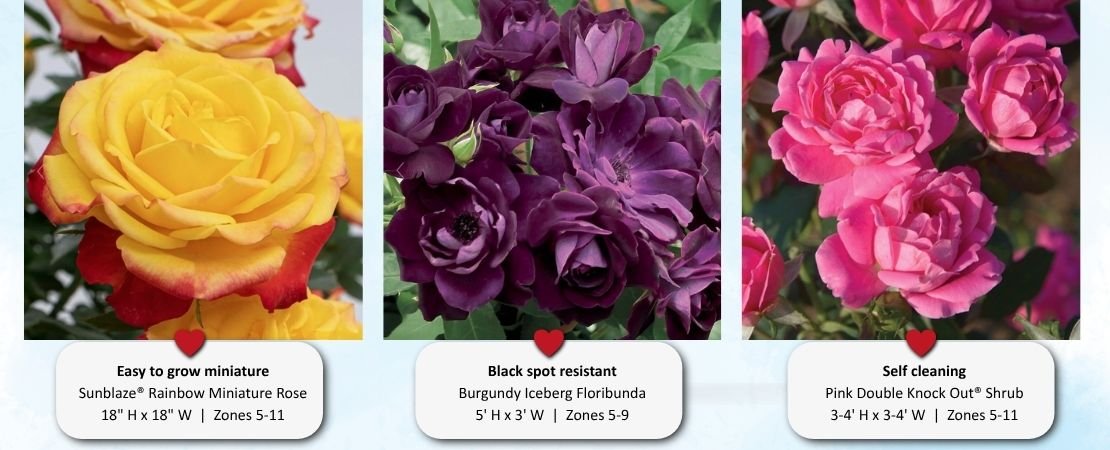
Flower color and fragrance may catch your attention first. Once you've found a few favorites, their growing information will help you picture each one in your garden. You don't need to understand every rose term to make a good choice. Start with disease resistance, mature size, deadheading needs, and suitability for your climate.
Disease resistance can reduce leaf spotting and leaf loss, especially during wet summers. Look for resistance to specific diseases when possible. Black spot resistant roses are helpful where black spot is common; resistance to powdery mildew or rust addresses different problems. A general "disease resistant" description doesn't mean immunity to every disease.
A suitable mature size means less pruning to keep the rose within its space. Check both height and width. If you have a three-foot-wide planting area, choose a rose that fits it rather than planning to keep a much larger plant cut back.
A self-cleaning habit means you don't need to remove spent flowers regularly for continued bloom. This is useful if you'd rather skip deadheading. Other repeat-blooming roses benefit from having faded flowers clipped off.
Climate suitability helps the plant grow well through your seasons. Your USDA hardiness zone describes winter cold. Heat and humidity tolerance are separate traits to check if your summers are hot or muggy.
Repeat flowering is another welcome feature, giving you more than one display of blooms each season. Browse disease resistant roses and compare these traits alongside the flowers you like.
The best rose for you depends partly on how you'd like to enjoy it. Use these groups to narrow your search, then compare individual varieties for size, hardiness, and disease resistance.
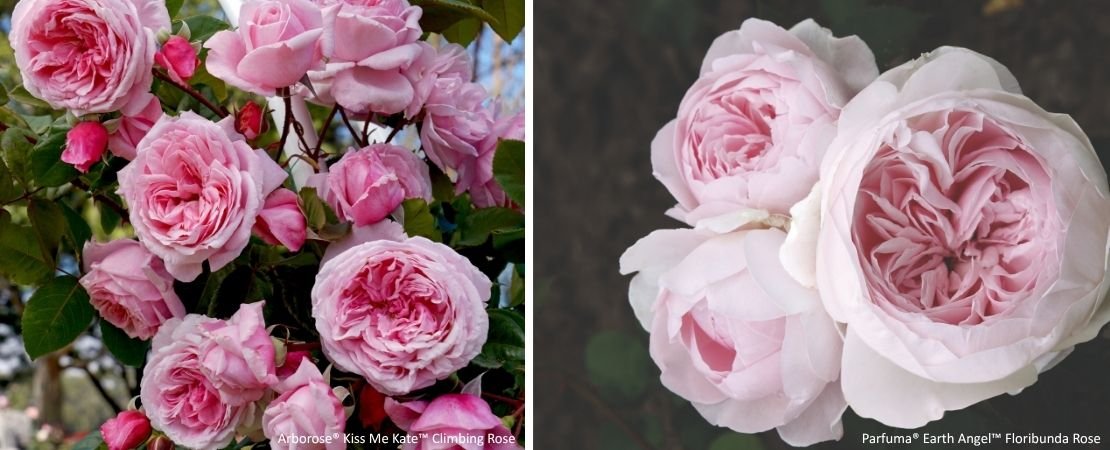
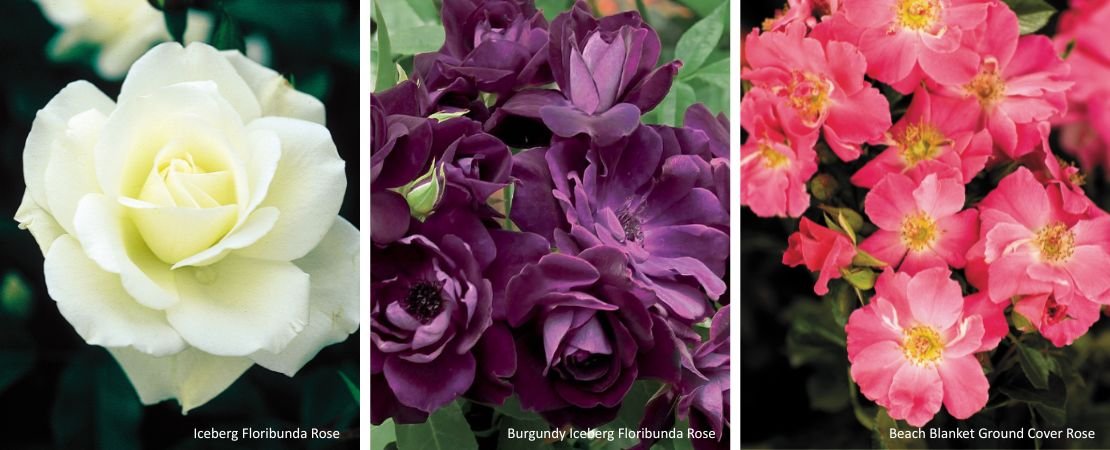
Floribunda roses bloom in clusters, with several flowers on a stem. Choose one if you'd like plenty of flowers in a garden bed or a compact rose for a large patio pot.
As you compare floribundas, check mature height and width, disease resistance, and fragrance. For a patio pot, choose a compact variety specifically recommended for containers. For a garden bed, allow enough space for its full-grown width.
Check deadheading instructions for the variety you choose. Floribundas aren't all self-cleaning, and removing faded blooms can help encourage the next flowers.
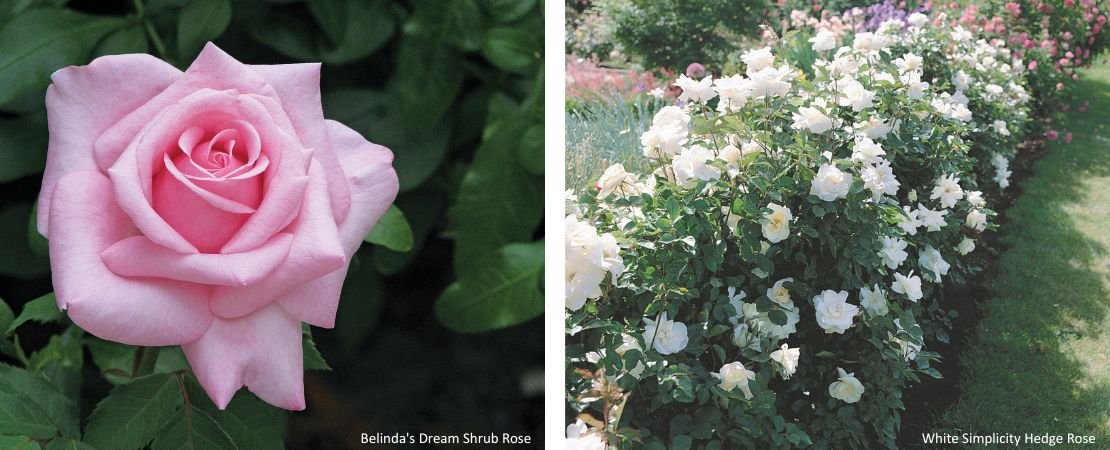
Shrub roses work well among perennials, as individual flowering shrubs, or in a hedge. Their sizes vary, so decide how tall and wide you want the planting to become before choosing.
If skipping deadheading is a priority, look for a self-cleaning shrub rose. Check its disease resistance, sun requirements, and hardiness zones, then use its mature width to plan your spacing.
Other shrub roses offer different fragrances, flower forms, and sizes. Compare the full selection rather than assuming they all have the same care requirements.
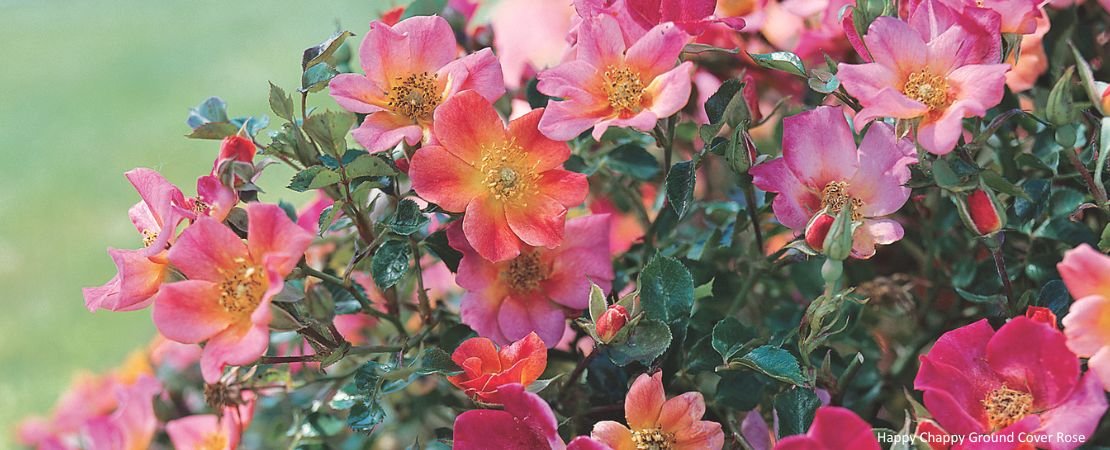
Choose ground cover roses when you want flowers near the front of a bed, along a sunny slope, or spilling over the edge of a large container. Their spreading growth makes them a good alternative to an upright rose bush in these settings.
To choose one, check three details:
Look for disease resistance and repeat flowering as well. The term "ground cover" describes how the rose grows, not how much care it needs.
Prepare the area by removing weeds before planting, then mulch the spaces between young plants. Their branches will take time to fill in, and you'll still need access for watering and occasional pruning. Keep spreading stems back from paths where thorns could catch clothing.
For a pot, choose a compact variety specifically suited to containers. Give it a deep planter with drainage holes rather than a shallow bowl.
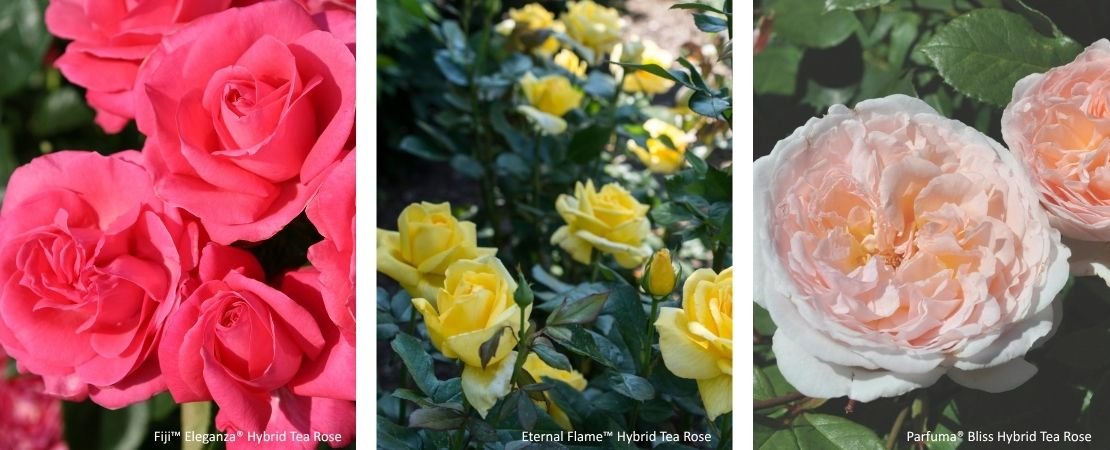
If you want roses to bring indoors, start with hybrid tea roses. Many produce large flowers on long stems, and you can find disease-resistant varieties in this group.
For an easy care cutting rose, look for a hybrid tea with documented disease resistance and a hardiness range that includes your zone. Check the fragrance description and mature dimensions so you can choose the scent and size you want.
When comparing hybrid teas, look for disease resistance, winter hardiness, and the mature height you want. Fragrance varies, so check that detail if scented bouquets are your goal.
Expect to prune according to the variety's instructions and remove faded blooms as needed. If you regularly cut flowers for a vase, you'll already be doing some of that work. A disease-resistant hybrid tea can be a good first rose if cutting flowers is what you enjoy most.
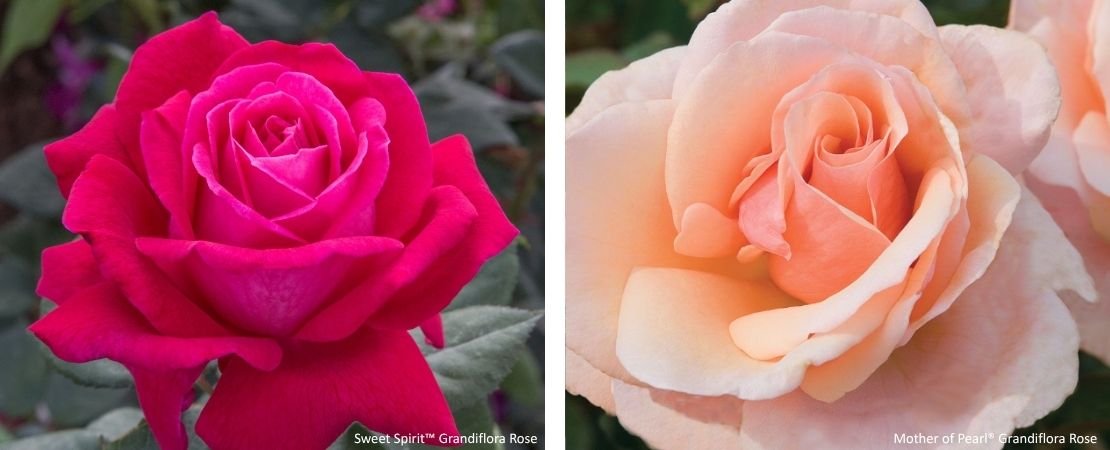
Grandiflora roses offer large flowers, often in clusters, and many grow taller than compact floribundas. They're a good choice for the back of a sunny border or a spot where you want height.
Check the mature dimensions carefully, then compare disease resistance and fragrance. For a small patio container, a compact variety is usually easier to accommodate than a tall, vigorous plant.
Give most roses at least six hours of direct sunlight each day, with six to eight hours a useful target. Morning sun helps dry dew from the leaves. Follow any variety-specific guidance for afternoon shade in hot climates.
Allow enough room for the mature plant. For two roses expected to grow three feet wide, about three feet between their centers is a starting point; follow the variety's spacing instructions and leave additional access room where needed.
Keep neighboring shrubs and perennials from growing through the rose. Avoid squeezing it into a narrow gap against a solid wall. When pruning, remove dead branches and stems that cross and rub against one another. This helps keep growth less crowded.
Choose soil that drains well. If the planting spot stays waterlogged after rain, use a better-drained bed or a suitable container.
Our Beginner's Guide to Growing Roses includes planting and care videos you can follow as you get started.
For roses in the ground, about one inch of water per week, including rain, is a useful starting point during the growing season. Hot weather, sandy soil, and newly planted roses may require more frequent attention.
Check the soil a few inches below the surface. If it feels dry, water slowly so moisture soaks into the root area rather than running away.
Use a soaker hose, drip irrigation, or a watering wand held beneath the leaves. Direct water onto the soil around the plant, moving around the root area rather than pouring it all against the main stem. Thorough watering is more useful than a quick daily sprinkle.
Add a two- to three-inch layer of mulch to conserve moisture and reduce weeds. Leave a gap around the base of the rose.
Easy care roses benefit from nutrients just as other flowering roses do. For established repeat-blooming roses, a common approach is to feed when spring growth begins and again after the first flush of flowers.
The fertilizer determines the rest of the schedule. Some products need another application during summer; controlled-release products may feed for several months. Follow the label's rate and interval rather than adding extra fertilizer between scheduled applications.
Apply fertilizer to moist soil and water it in as directed. For a newly planted rose, follow the supplied planting instructions and avoid heavy feeding while it establishes.
In climates with winter freezes, stop growth-promoting feeding about six weeks before the expected first frost. Container roses need particular attention to feeding because watering gradually washes nutrients from the potting mix.
Compost can improve the soil, and an organic rose fertilizer is an option if that suits your gardening preferences. Our guide to pruning and feeding roses explains both jobs.
Disease resistance is one of the most useful traits to look for when choosing low maintenance roses. Combine it with adequate sunlight, uncrowded growth, and watering at soil level to reduce the conditions that encourage black spot.
You can recognize black spot by dark, often irregular spots on leaves, sometimes surrounded by yellowing. Affected leaves may turn yellow and fall, often starting lower on the plant. Powdery mildew looks different: it forms a white, powdery coating on leaves, shoots, or buds.
If you notice a few spotted leaves:
Don't remove healthy leaves simply because they're near a spotted one. Those leaves help the rose grow.
For pictures and more detail, see our guide to black spot on roses.
If you want to care for roses without routine spraying, match your response to the problem you can see. A few spotted leaves call for different care than insects clustered around a flower bud.
Kitchen mixtures aren't a dependable cure for rose diseases. Baking soda and dish soap can burn leaves, and results from milk sprays vary. Avoid experimenting with stronger concentrations when a homemade treatment doesn't work.
If leaf spotting continues, watch the new growth: existing spots won't turn green again. Take a clear photograph of the whole plant and close-ups of affected leaves if damage is spreading or the rose is losing substantial foliage. Your county's Cooperative Extension office, a university-supported gardening advice service, can help identify the cause before you buy a treatment.
For help recognizing symptoms, see our guide to black spot on roses.
Herbicide drift from lawn or weed treatments can injure roses. Avoid spraying weed killer near the plants or when wind could carry it onto their leaves. Hand-pulling weeds and maintaining mulch are practical alternatives around a rose bed.
New leaves that become unusually narrow, twisted, or cupped may indicate herbicide injury rather than a disease that needs treatment.
Start with a compact variety recommended for pots, then choose the container for its mature size - not the small nursery pot it arrives in.
As a practical starting point:
| Rose at Maturity | Container Guidance |
|---|---|
| Compact miniature or small patio rose | An 18-inch-wide and 18-inch-deep pot gives a forgiving starting size, although some miniatures can grow in smaller deep pots. |
| Compact floribunda or shrub rose, roughly 2 to 4 feet tall | Start with at least 18 inches of internal width and depth; a 20- to 24-inch container offers more growing room and moisture reserve. |
| Larger or vigorous rose | Use a substantial planter or half-barrel, or choose a garden bed. Confirm container suitability for the variety before buying. |
These are starting guidelines, not a fixed pot-to-height formula. Root growth, mature spread, summer heat, and container shape also matter.
Choose drainage holes and fill the pot with quality potting mix. Don't add a gravel layer at the bottom. Keep drainage holes clear, and don't leave the pot standing in water.
Check moisture daily in hot weather. When the top inch begins to dry, water slowly until excess water drains from the bottom. Follow the fertilizer's container instructions, including any fertilizer already present in the potting mix.
If your rose will spend winter outdoors in its pot, a useful rule of thumb is to choose a variety hardy to two USDA zones colder than your own. For example, in Zone 7, look for a rose hardy to Zone 5.
Roots in a pot are more exposed to cold than roots in the ground. The two-zone rule improves your starting choice but doesn't guarantee survival in an exposed container.
In cold climates, plan a sheltered winter location and insulation for the pot, or suitable unheated storage while the rose is dormant. Check soil moisture occasionally during winter so the roots don't dry out completely.
Our guide to growing roses in pots and containers covers planting and winter protection.
Start with the Roses for Beginners collection and narrow your choices in this order:
Before ordering, check the plant form and planting instructions. A bare-root rose and a rose shipped in a nursery container arrive differently, but either can become an easy care garden rose when the variety and planting spot are well matched.

