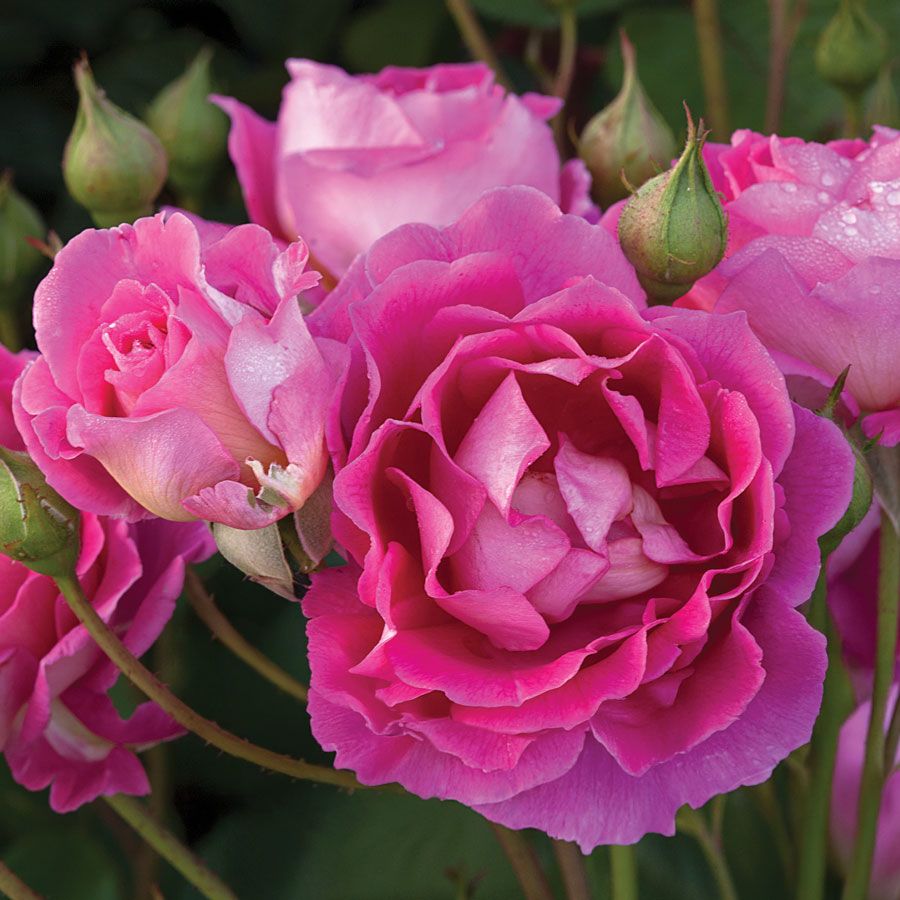
Mauvelous Floribunda Rose stands out with a flower color unlike almost any other rose in the garden. Large clusters of richly colored blooms open in shades of deep mauve with a soft, lighter reverse, creating exceptional contrast from late spring through late fall. Combined with a strong lemon fragrance and dependable repeat flowering, this Jackson & Perkins introduction brings season-long beauty to landscapes and bouquets alike.
Bred by renowned hybridizer Dr. Keith Zary and introduced by Jackson & Perkins in 2018, Mauvelous pairs distinctive color with vigorous growth, glossy dark green foliage, and excellent disease resistance. Its upright habit makes it equally at home in mixed borders, perennial gardens, mass plantings, and cutting gardens where its long stems and abundant blooms can be enjoyed indoors as well as outside.
Blooming in generous clusters of up to nine flowers, Mauvelous produces fully double, ruffled blooms measuring approximately 4 inches across with up to 35 petals. Elegant pointed buds gradually unfurl to reveal rich mauve petals highlighted by a lighter reverse, creating depth and dimension rarely found in garden roses. The combination of unusual color and a strong citrus-like fragrance makes this variety a standout throughout the growing season.
Its upright, vigorous habit reaches approximately 4 feet tall and 3 feet wide, providing outstanding landscape performance while producing long, sturdy stems ideal for cutting. Whether planted in borders, perennial beds, or grouped for greater visual impact, Mauvelous delivers dependable repeat bloom, healthy foliage, and exceptional garden presence year after year.
How large does Mauvelous Floribunda Rose grow?
Mature plants typically reach approximately 4 feet tall and 3 feet wide with an upright, well-branched habit that fits beautifully into mixed borders and landscape plantings.
Is Mauvelous Floribunda Rose fragrant?
Yes. Mauvelous is known for its strong lemon fragrance, making it as enjoyable to smell as it is to admire in the garden or in fresh-cut arrangements.
Does Mauvelous bloom throughout the season?
Yes. This repeat-blooming Floribunda produces generous clusters of flowers from late spring through late fall with proper care.
Is Mauvelous disease resistant?
Yes. Healthy, glossy foliage and excellent disease resistance help this variety maintain outstanding garden performance throughout the growing season.
Is Mauvelous a good rose for cutting?
Absolutely. Long stems, abundant flower clusters, strong fragrance, and long-lasting blooms make Mauvelous an excellent choice for fresh bouquets and floral arrangements.
Plant in full sun in moist, well-drained soil. Water regularly while the plant becomes established, and remove spent blooms to encourage repeat flowering throughout the season. Prune in early spring to maintain shape, remove dead or damaged wood, and promote vigorous new growth and abundant blooms.
Every Jackson & Perkins rose is backed by more than 150 years of horticultural expertise. Explore our growing resources to help your roses thrive season after season.
| Genus | rosa |
| Variety | 'JACauvel' |
| Zone | 5 - 9 |
| Bloom Start to End | Late Spring - Late Fall |
| Habit | Upright |
| Height | 4 ft |
| Width | 3 ft |
| Bloom Size | 4 in |
| Petal Count | 35 |
| Additional Characteristics | Bloom First Year, Free Bloomer, Easy Care Plants, Fragrance, Long Bloomers, Repeat Bloomer |
| Bloom Color | Light Pink, Light Purple |
| Bud Shape | Ovoid, Pointed |
| Flower Shape | Double, Ruffled |
| Foliage Color | Dark Green, Glossy |
| Fragrance | Strong, Lemony |
| Light Requirements | Full Sun |
| Moisture Requirements | Moist, well-drained |
| Resistance | Disease Resistant |
| Soil Tolerance | Normal, loamy |
| Uses | Beds, Border, Cut Flowers, Landscapes |
| Restrictions | *Due to state restrictions we cannot ship to the following: Canada, Guam, Puerto Rico, Virgin Islands, Hawaii |
Jackson & Perkins is one of the most recognized names in the gardening industry. In fact, for decades rose lovers have considered Jackson & Perkins synonymous with great roses. How has Jackson & Perkins earned this reputation? Simple, for over 100 years we have brought our customers the world's finest selection of roses.
Jackson & Perkins became a leader in the world of roses by producing dozens of award-winning roses. Jackson & Perkins has won more All-America Rose Selection awards than any other US company. In addition to the AARS awards, Jackson & Perkins has won numerous other awards, including the coveted Golden Rose of The Hague and the Royal National Rose Society’s President’s International trophy, among others.
From seed to market a new garden rose can take 8 to 10 years to develop. Every year, thousands of seedlings are grown but only a handful are selected to move into the trial phase. During this time, potential new roses are grown and evaluated in different climatic regions of the country. Our rosarians are looking for rose bushes that have stronger disease resistance, vigorous growth habits, and clean healthy foliage. When it comes to blooms, they are looking for improved flower form, unique colors, and strong fragrance.
Today Jackson & Perkins offers over 200 varieties of roses that includes a broad selection of exclusive roses, historical favorites, and innovative genetics from hybridizers around the world. We have two seasons each year for roses. In the spring, we offer bare root rose bushes, bare root 36” trees, 24” patio trees, and container grown roses. Our fall season is all bush roses, and they are available in 2QT and 1GL containers.
Whether you are new to roses or are an experienced rosarian, our online store has rose varieties for you. Our website is packed with information. You will find each rose fully described and lots of articles and videos that will help answer all your questions. Our call center staff have decades of experience and are just a phone call away.
Jackson & Perkins is here to help you in every way on your rose-growing journey. There is no other plant in the garden that comes in more colors, fragrances, shapes, or forms, or performs as many functions than roses do.
Bare root roses are the most common form of roses for spring and early season planting, and come in two types: grafted and own root.
Grafted roses, sometimes referred to as budded bare root roses, have roots that belong to a different variety of rose than the shoots. While the shoots will grow into the variety of rose you've selected, the root variety has been specially grown and developed for hardiness, improved resistance to common diseases, and improved resistance to certain weather conditions. The roots on any grafted rose you receive are usually already two years old, so they'll establish in your garden more quickly when planted.
Own root roses are grown from rose shoot cuttings and develop their own root system. Unlike grafted roses, both their roots and shoots come from the same variety of plant.
All Jackson & Perkins bare root roses are maintained in a suspended state of growth in our state-of-the-art wet cooler, so they'll be delivered to you with no foliage or blooms. The wet cooler has a uniform storage temperature set just above freezing and uses a fog system to provide consistent humidity of 100%, ensuring the roses remain fully hydrated and don't exit dormancy before leaving our facility. While you might see some variance in size, even within the same variety of bare root rose, all our roses meet the same rigorous standards of quality.
So, not sure which type of bare root rose you should choose? Don't worry, we've got that covered. We've researched which varieties of bare root roses grow better as grafted or own root, and both types can be planted in the early spring months, so just choose the variety of rose you're most interested in and get planting.
Though you might be surprised or intimidated when you receive a box of bare root roses filled with roots and shoots, rest assured, with the proper care, these little bundles will grow into stunning roses.
container roses are typically available in 2-quart sizes or larger and come with established foliage that may or may not have blooms. While bare root roses should generally be planted in early spring, container roses allow you quite a bit more flexibility in planting time, from spring all the way through fall in many zones. Fall can be a good season to plant container roses because it allows them enough time to establish themselves before cold or freezing temperatures arrive.