Choose Your Country

When you're shopping for roses, you’ll often see two main types to choose from: grafted roses and own root roses. Each type has its own unique characteristics and benefits, which can impact how the rose grows, the level of care it might need, and how well it performs in various climates. Understanding the differences between these types can help you decide which rose is best suited for your garden and growing conditions.
As a rose grower you don't need to worry about the root types because companies like Jackson & Perkins have done the research for you. Just buy the rose you want and feel confident that it's in the right form and will grow best. It's always fun to be knowledgeable about what we're planting though. So, a quick visual cue to tell one from the other? If it is grafted there will be a knot at the point the roots meet the canes. If there is no knot, and a smooth transition from the canes to the root, it is own root.
Own root roses are propagated by taking cuttings from a parent rose plant and rooting them to grow into independent plants. These roses grow from their natural root system rather than relying on rootstock from
another plant. Own root roses are exact replicas of the original plant, meaning they maintain the same characteristics without genetic interference from another variety.
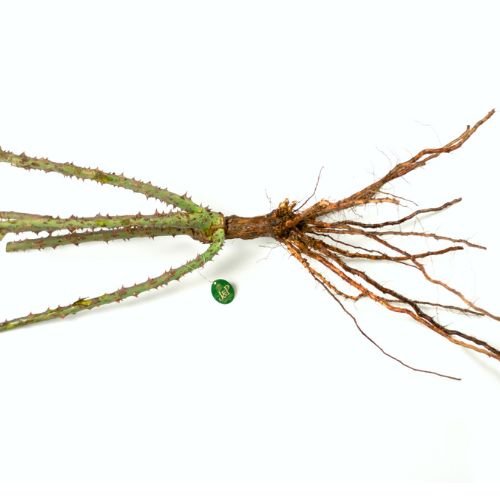
According to the American Rose Society, own root roses are particularly well-suited for cold climates where the risk of graft damage from freezing is higher. Since the entire plant, including its roots, is from a single variety, it can more easily withstand harsh winters.
SHOP FOR ROSESGrafted roses are created by joining a bud of one rose variety (known as the scion) onto the root system of a different, often hardier variety (the rootstock). This method is common in the rose industry, as it combines the desirable traits of two different rose varieties: the vibrant blooms of the scion and the vigorous, disease-resistant rootstock. The result is a plant that can thrive in a broader range of conditions.
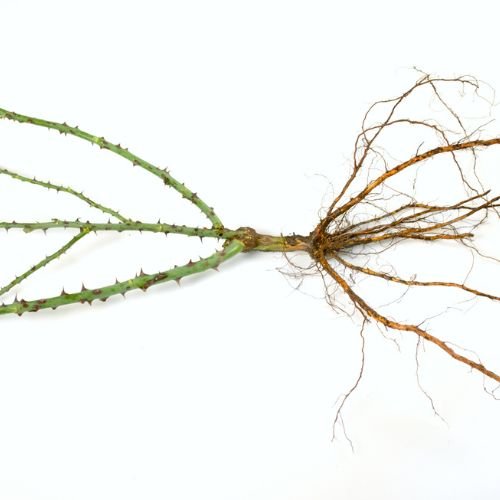
Grafting offers several advantages:
Grafted roses are especially popular in areas with mild winters where the graft union remains above ground, minimizing the risk of winter damage. This approach also allows rose breeders to produce popular rose varieties that might otherwise struggle to grow in specific soil or climate conditions, broadening their appeal to a larger range of gardeners.
| Feature | Own Root Roses | Grafted Roses |
|---|---|---|
| Propagation Method | Grown from cuttings and developed on their roots | Budded onto rootstock from another, often hardier, rose variety |
| Longevity | Tend to have longer life, especially in cold climates | Susceptible to damage at graft union in very cold regions |
| Root System | Natural roots that mirror the original plant | Root system may offer greater vigor or disease resistance |
| Growth Rate | Slower to establish and grow | Generally faster growth and earlier blooming |
| Flower Consistency | Blooms are true to type, without influence from rootstock | Graft can sometimes affect bloom quality or consistency |
| Resilience | Good in harsh winter regions, regrows from own roots if top dies | Better adapted to various soils and resistant to certain pests |

Consistency and Reliability: Own root roses are genetically identical throughout the plant, meaning that if the plant dies back, it will regrow true to type.
Better for Colder Climates: The entire plant has uniform hardiness, so if it dies back in winter, it can regrow without losing its defining characteristics.
Lower Risk of Suckers: Since there is no rootstock, there's no risk of suckers (unwanted growth from the rootstock) taking over the plant.
Slower Establishment: Own root roses generally take longer to establish and may grow more slowly in their initial years.
Susceptible to Poor Soil Conditions: Without a robust rootstock, they may struggle in areas with poor or challenging soil.
Vigorous Growth: The strong rootstock helps grafted roses establish quickly and produce more abundant blooms.
Disease Resistance: With the right rootstock, grafted roses are often more resilient to soil-borne diseases and pests.
Adaptable to Various Soils: Grafted roses often thrive in a broader range of soil conditions than own root roses.
Susceptible to Cold Damage: In colder climates, the graft union (the point where the scion meets the rootstock) can be damaged, which may kill the grafted portion of the plant.
Potential for Suckering: Grafted roses can produce suckers, or unwanted growth, from the rootstock. These can overtake the grafted portion if not managed.

Both grafted and own root roses can be planted in similar ways, but there are specific steps to consider for each type.

Although own root roses offer benefits like uniform hardiness and consistency, they require specific conditions to thrive, such as stable soil and moderate temperatures. Grafted roses, on the other hand, provide vigor and adaptability through hardy rootstocks, making them more versatile in varying climates and soil types.
It's a benefit for gardeners, because having both options available offers flexibility. Those in colder climates or with challenging soil conditions may find grafted roses better suited to their environment, while others might prefer the reliability of own root roses, especially in regions where winter conditions are less severe.
Technically, gardeners can graft their own roses, but it requires skill and specialized equipment. Successful grafting demands precision in matching the scion and rootstock, a clean environment to prevent disease, and expertise to ensure the graft union heals properly. Furthermore, rootstocks are often patented or bred specifically for commercial use, making it difficult to access the ideal rootstock varieties. Because of these challenges, grafting is generally left to professional nurseries.
Deciding between own root and grafted roses depends on the gardener's goals, climate, and soil conditions. Own root roses are an excellent choice for cold climates and for those who prefer a naturally grown plant that maintains its characteristics over time. Grafted roses, with their robust rootstock, offer versatility and vigor, especially in warmer climates and challenging soils.
While Jackson & Perkins has done the homework, understanding these differences will empower rose gardeners to make an informed choice for their garden, confident that they select roses that will grow beautifully and bring enjoyment for years to come.

