Choose Your Country

One of the most delightful aspects of Old Garden Roses is how little care they actually need. These roses thrived for centuries without the modern garden chemicals and fertilizers we rely on today. Their resilience is part of their charm, and by keeping their care simple and natural, you can enjoy their beauty with minimal effort. Let's look at the short list of essentials to care for Old Garden Roses.
When it comes to pruning Old Garden Roses, less is more. These roses don't respond well to the heavy pruning you might be used to with modern roses. Instead, they prefer to grow into their natural shape, which helps them bloom more prolifically.
Spring-Flowering Old European Roses (like Gallicas, Damasks, and Albas): Prune these varieties right after they finish their bloom cycle in late spring or early summer. Focus on removing dead or damaged canes and thinning out old, unproductive wood to encourage new growth.
Repeat-Flowering Varieties (like Bourbons, Noisettes, and Teas): These can be pruned lightly when you prune your modern roses, usually in late winter or early spring. Remove dead or damaged growth, and trim lightly to maintain shape.
Deadheading—or removing spent blooms—can encourage repeat flowering in varieties like Bourbons and Chinas. However, for once-blooming varieties, skip the deadheading after they finish their spring display. Why? These roses often produce ornamental hips (seed pods) in the fall, which add an organic splash of color to your garden and provide a valuable food source for birds in winter. Letting these hips form is part of the joy of growing Old Garden Roses.
Old Garden Roses aren't heavy feeders and do best with organic, natural fertilization methods. Here's what works best:
One of the major advantages of Old Garden Roses is their natural disease resistance. These roses evolved in a time before chemical sprays and pesticides, so they're inherently hardy. Most of the time, they'll thrive without any intervention.
No need for regular sprays: Old Garden Roses don't require a regimented spraying routine. Just fertilize twice each season.
Spot treatment for outbreaks: In the rare case of severe fungal issues (often due to unusual weather conditions), you can use a natural fungicide to address the problem.
By allowing these roses to fend for themselves, you're not only saving yourself time but also fostering a healthier, more sustainable garden.
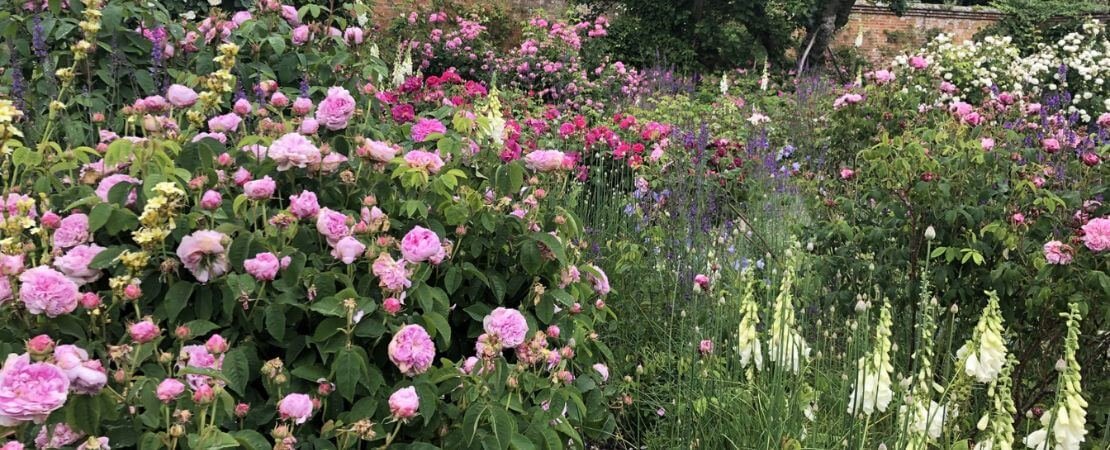
Mottisfont Abbey Garden in the UK. Designed by Graham Stuart Thomas. A mixed garden with perennials and Old Garden Roses.
Old Garden Roses don't demand frequent watering once established, as their deep roots are adept at finding water. However, they'll need regular watering during their first growing season to establish strong roots.
Water deeply and less frequently: This encourages deep root growth, which helps the plants thrive even in drier conditions.
Adjust for climate: In particularly hot or dry regions, provide supplemental water during long stretches without rain.
Old Garden Roses are a living link to centuries of horticultural tradition. These are the same roses that inspired poets, painters, and gardeners long before the invention of modern hybridization. By adding them to your garden, you're participating in that history—and they'll reward you with beauty, fragrance, and a sense of historic preservation.
Here's the real beauty of Old Garden Roses: they're forgiving, resilient, and practically take care of themselves. With just a little pruning, feeding, and occasional watering, these roses will flourish and fill your garden and connect you to centuries of gardeners before you.

